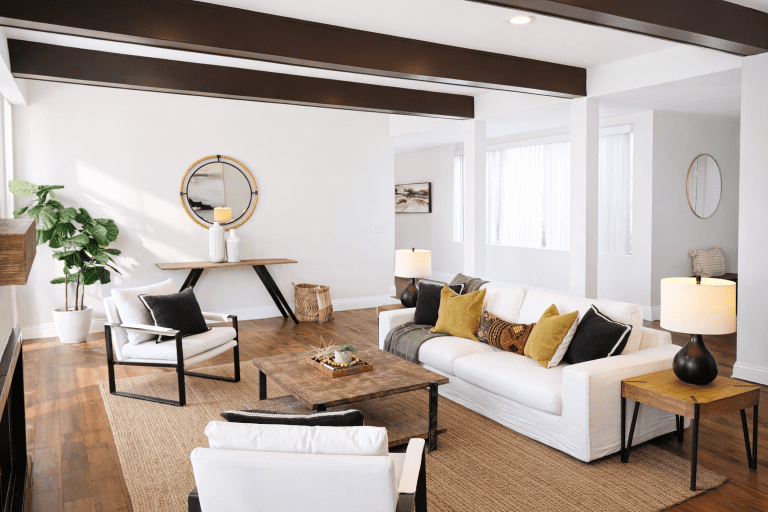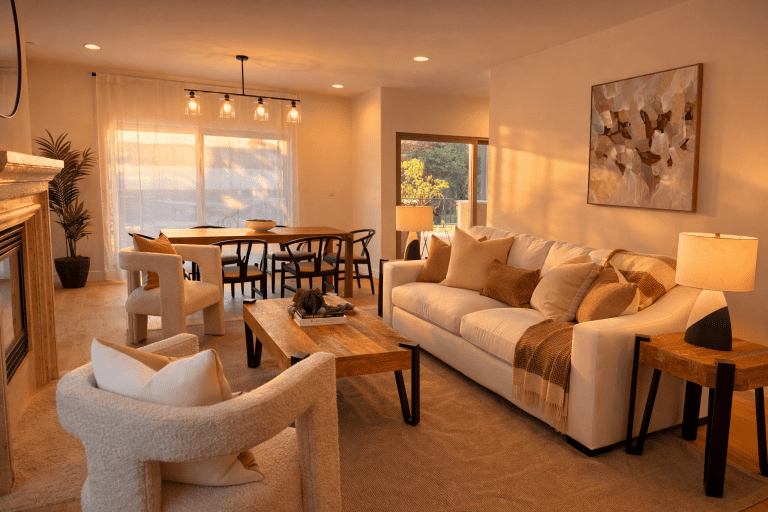
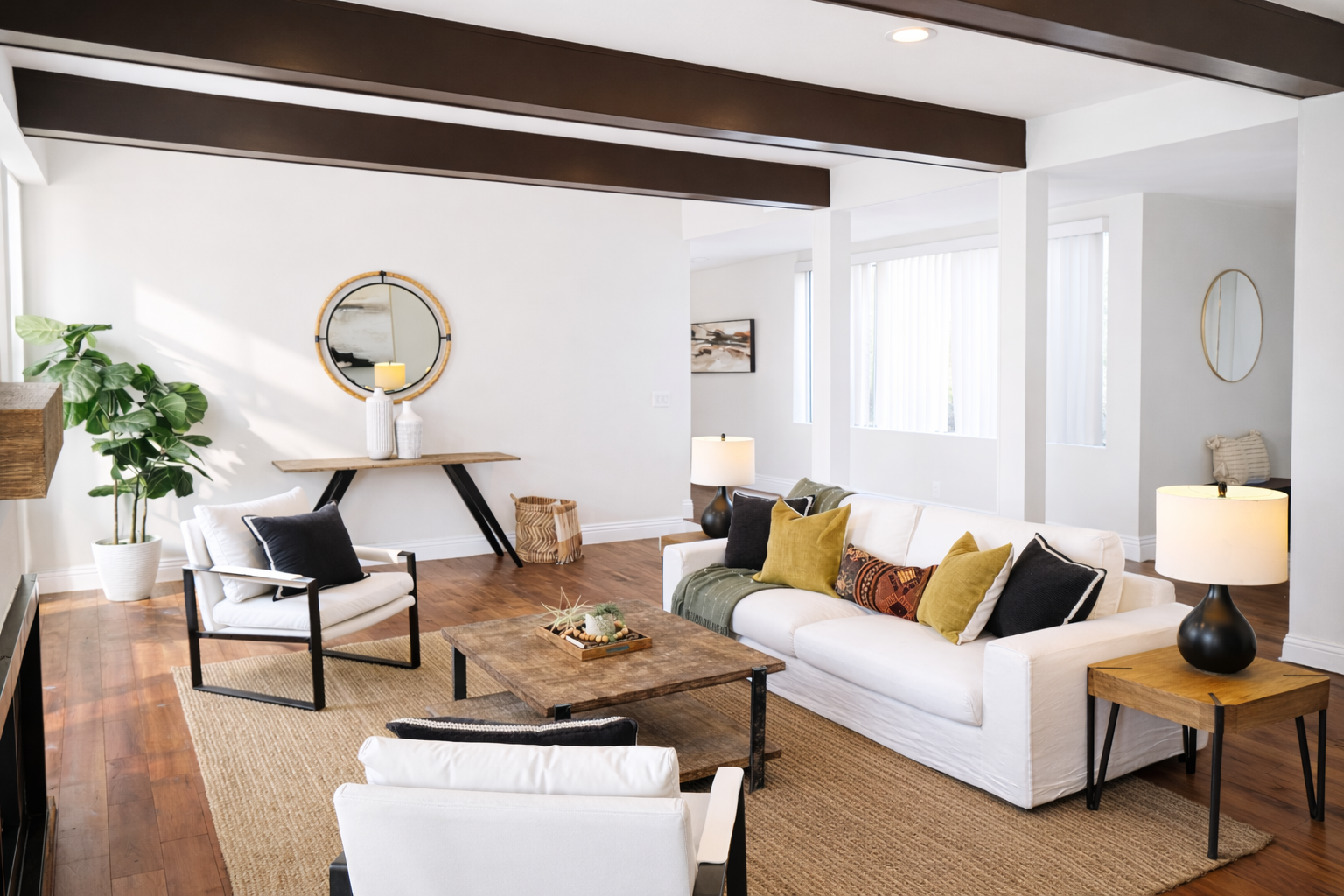
Agents should plan staging and photography early, with installation scheduled after the home is fully repaired, visually resolved, and professionally cleaned. Staging is not designed to compensate for unfinished work—it is meant to refine a completed space into a clear, cohesive presentation for the market.
Why is pre-staging preparation a pricing decision—not just a logistics step?
The sequence leading up to staging is not operational—it is strategic.
Every listing enters the market through photography. That first impression becomes the reference point for:
perceived value
buyer confidence
showing momentum
If the home is not fully resolved before staging is installed, the visual story becomes fragmented. Buyers may not be able to articulate what feels off—but they register it immediately.
And in Los Angeles, where buyers are visually literate and inventory is increasingly competitive, that hesitation carries weight.
Preparation is not about perfection. It is about removing friction before the home is seen.
Expert Insight
The market does not see effort—it sees outcomes.
Sellers often assume that because work is being done, value is being added. But buyers are not evaluating the process. They are evaluating the final image.
If a home enters the market in a partially resolved state, the perception of incompletion becomes part of its identity. That perception is difficult to reverse, even if the underlying issues are minor.
What should be completed before staging is scheduled?
Staging should sit on top of a finished foundation—not an active job site.
At a minimum, the following should be resolved:
Paint — fully completed or intentionally untouched, but never partial
Flooring — repaired, replaced, or thoroughly cleaned
Lighting — consistent, functional, and aligned in tone
Repairs — patched walls, adjusted doors, secured hardware
Surfaces — clean, uninterrupted, and ready to be photographed
Deep cleaning — completed after all trades have left
The goal is not to over-improve the home. The goal is to ensure that nothing competes with the presentation. Check out our insights post “What Sellers Should Finish Before Home Staging“.
Expert Insight
Partial updates create more friction than no updates at all.
A fully original home can still feel cohesive if it is clean, consistent, and resolved. But when one element is updated and others are not—such as fresh paint next to worn flooring—the contrast draws attention to what remains unfinished.
Consistency matters more than isolated improvements.

Why does staging fail when the sequence is wrong?
Staging is often misunderstood as a visual upgrade.
In reality, it is a clarification tool.
It defines:
scale
flow
function
emotional tone
When installed too early, staging loses that clarity. Furniture competes with unfinished elements. Styling becomes temporary instead of intentional. The home reads as in-progress rather than resolved.
That is where value begins to erode—not because of price, but because of perception.
Expert Insight
Staging is not decoration—it is visual alignment.
When staging is used correctly, it aligns the architecture, scale, and function of a space into a single, legible story. When used too early, it becomes disconnected from the condition of the home, and that alignment breaks.
The result is not neutral—it is confusing.
What role should the agent play in controlling this process?
Strong agents do not react to the condition of a listing—they shape it.
That means:
setting expectations with sellers early
defining what “listing-ready” actually means
sequencing work before staging is ever scheduled
Without that control, the process defaults to convenience:
staging gets rushed
photography gets delayed
the listing launches without clarity
The result is often subtle, but measurable: weaker engagement, slower traction, and increased sensitivity to price.
Expert Insight
The strongest listings are directed, not assembled.
When agents take control of sequencing, the listing feels intentional from the first image. When they do not, the process becomes reactive—driven by timing, convenience, or seller preference rather than presentation strategy.
Buyers can feel that difference immediately, even if they cannot explain it.
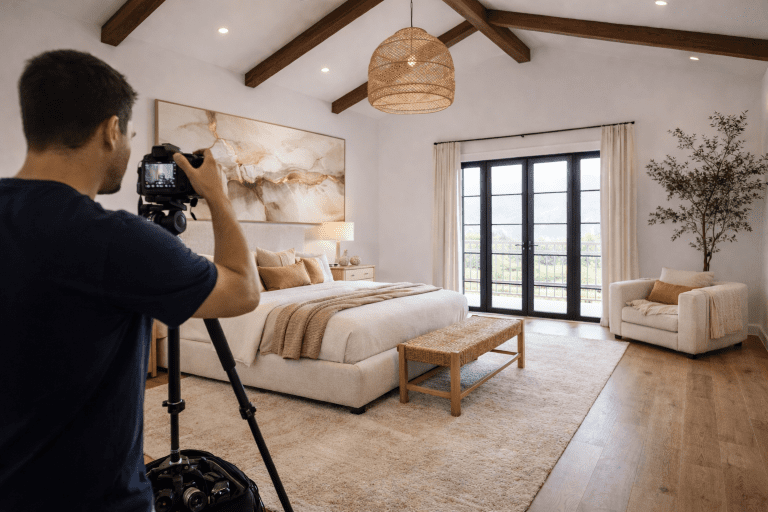
When should photography happen after staging?
Photography should follow staging quickly—ideally within 24 to 48 hours after installation.
This preserves:
composition
styling integrity
lighting consistency
spatial clarity
The longer the gap, the greater the risk that the home becomes disturbed—intentionally or unintentionally.
In a presentation-driven market, that timing matters more than most sellers realize.
Our guide to staging as the final preparation step distinguishes early planning from the installation date.
How does this process impact listing performance in Los Angeles?
Los Angeles buyers are highly responsive to visual cues.
They are not just evaluating:
square footage
location
price
They are evaluating:
cohesion
proportion
emotional clarity
When a home feels complete, it reads as confident.
When it feels unresolved, buyers hesitate—and hesitation is where leverage begins to shift.
In a market where listings are taking longer to sell and buyers have more options, that distinction becomes more important.
Expert Insight
In design-aware markets, visual discipline becomes a form of pricing power.
Los Angeles buyers are accustomed to evaluating space quickly through images. Homes that feel composed and resolved tend to hold attention longer and generate stronger early engagement.
That early response often shapes the trajectory of the entire listing.
Agent checklist (pre-staging)
Before staging installation, confirm:
All visible repairs are complete
Paint is fully resolved (no partial work)
Flooring is finished or cleaned
Lighting is consistent across rooms
Property has been professionally cleaned after all work
Seller expectations are aligned with presentation strategy
Photography is scheduled within 48 hours of staging
Access is controlled between install and photo day
Mistakes to avoid
Scheduling staging while repairs are still active
Using staging to compensate for visible condition issues
Allowing partial updates (especially paint) to continue during or after staging
Delaying photography after installation
Treating staging as a decorative step instead of a strategic one
FAQs
When should agents schedule home staging?
Plan and reserve staging early. Install it after repairs, paint, flooring, and cleaning are complete, when the home is ready for presentation.
Can staging happen while contractors are finishing?
In most cases, no. Active work disrupts composition and weakens the final result.
What is the biggest mistake agents make before staging?
Scheduling staging before the home is visually resolved, which creates inconsistency in photos and buyer perception.
How soon should photos be taken after staging?
Ideally within 24–48 hours to preserve the integrity of the installation.
Does staging improve listing performance on its own?
Only when the underlying condition is already resolved. Staging enhances clarity—it does not correct visible issues.
Why does sequencing matter more in Los Angeles?
Because buyers are highly responsive to visual quality, and competition makes presentation more influential in early decision-making.
Should agents delay listing if the home isn’t ready?
In most cases, yes. Entering the market with a compromised presentation can create more long-term pressure than a short delay.
What does “listing-ready” actually mean?
A home that feels complete, cohesive, and visually resolved—before staging is installed and before photography begins.
Service Areas
KMW Interiors provides home staging and interior design services across West Los Angeles (Santa Monica, Venice, Culver City, Malibu, Pacific Palisades, Brentwood, Mar Vista, Playa Vista, Del Rey, Westchester, West Hollywood, Beverly Hills, Westwood, Holmby Hills, Bel Air, Hollywood Hills), the South Bay (Manhattan Beach, Hermosa Beach, Redondo Beach, Palos Verdes), and select Valley neighborhoods (Burbank, Sherman Oaks, Studio City).
View some of our client reviews here.