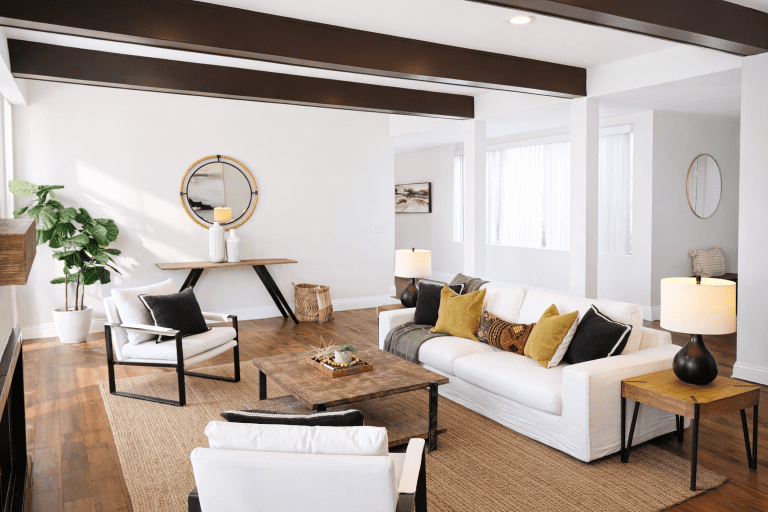
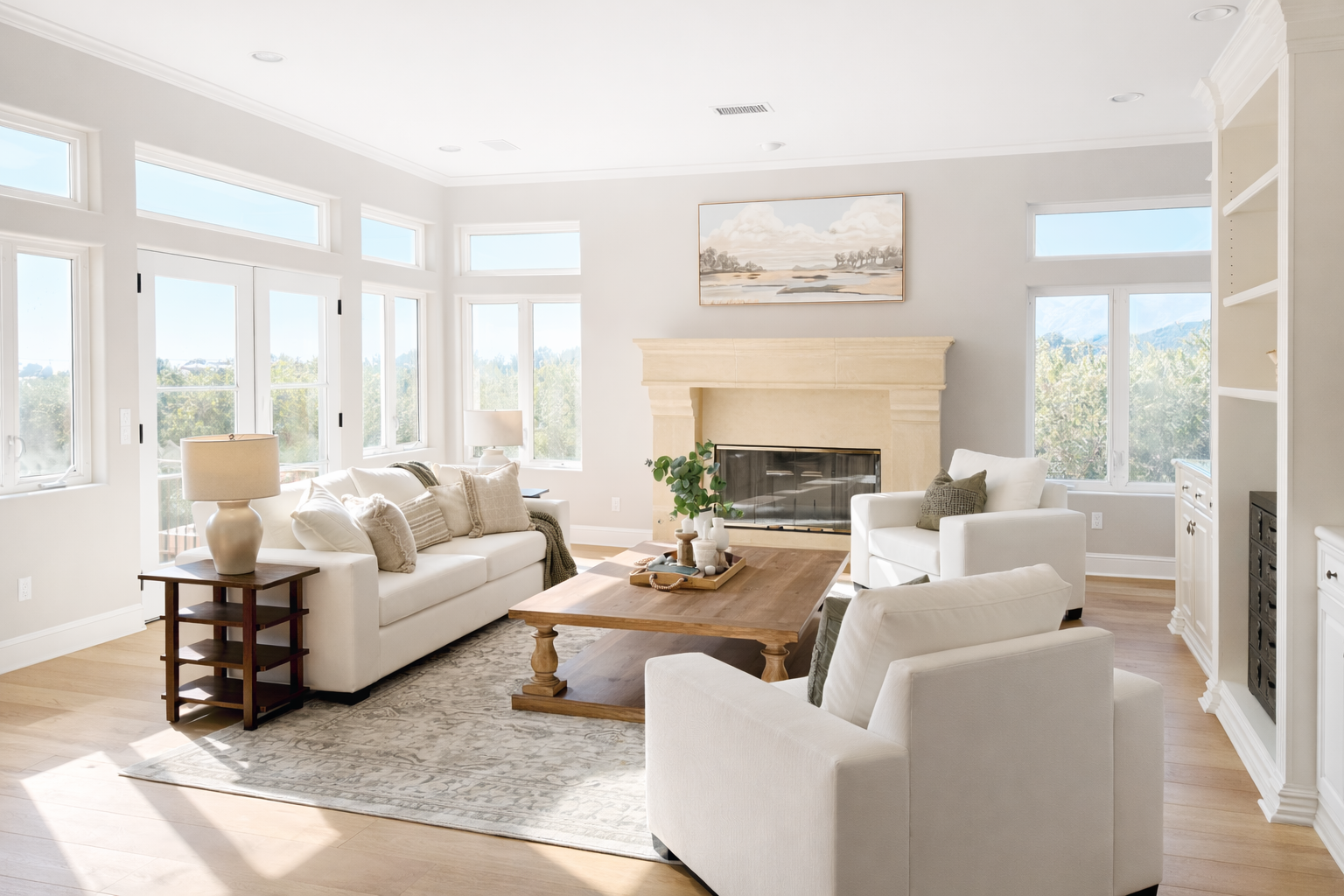
Price reductions are often driven by presentation issues rather than pricing alone. When a home feels unfinished, poorly scaled, or visually inconsistent, buyers hesitate—and that hesitation typically leads to reduced offers or extended time on market.
Why do presentation mistakes lead directly to price reductions?
Buyers don’t evaluate homes in a vacuum. They evaluate them in comparison—and increasingly, they do that first through photos.
If a listing feels:
unresolved
visually inconsistent
unclear in layout or scale
buyers subconsciously adjust what they believe it is worth.
That adjustment doesn’t show up as feedback like “the staging is off.”
It shows up as:
fewer showings
slower momentum
weaker offers
And eventually, price reductions.
Expert Insight
Buyers rarely say a home “feels unfinished.” They simply disengage.
In most cases, price reductions are not a reaction to value—they are a reaction to hesitation. When a home lacks visual clarity, buyers do not move forward with confidence. Instead, they wait, compare, or move on.
That pause is where pricing pressure begins.
Why does this matter more in Los Angeles right now?
Los Angeles is a presentation-sensitive market.
Buyers are not just comparing location and square footage—they are comparing:
cohesion
material consistency
visual clarity
With more inventory and longer days on market, listings have less margin for error.
Early perception now carries more weight than timing alone.
Once a property is positioned incorrectly, it often has to correct through price.
Read our Insights Post with a “Pre-staging Checklist for Agents”.
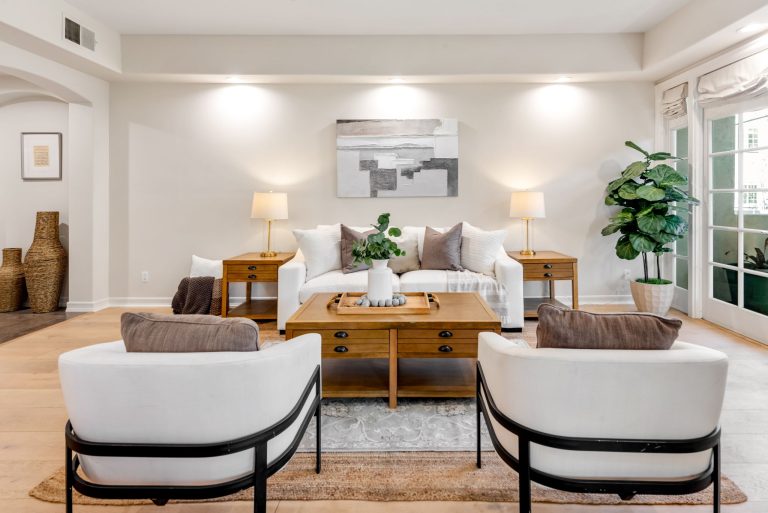
What are the most common presentation mistakes sellers make?
1. Listing before the home feels complete
Homes that show:
unfinished repairs
inconsistent paint
visible wear
create immediate hesitation.
Even small issues signal larger uncertainty to buyers.
Expert Insight
The first version of a listing is the most influential.
Once a property enters the market, its initial presentation becomes the baseline against which all future price adjustments are judged. Even if improvements are made later, the original perception tends to persist.
Launching before the home is fully resolved often creates a position that is difficult to recover from.
2. Leaving the home empty without defining scale
Vacant homes often:
feel smaller than they are
lack function
photograph without clarity
Without context, buyers struggle to understand how the space lives.
Expert Insight
Buyers do not buy square footage—they buy understanding.
Empty rooms remove context. Without scale, proportion, and function, buyers are left to interpret the space on their own. Most will default to uncertainty rather than possibility.
Clarity reduces hesitation. Undefined space increases it.
3. Overfilling or mis-scaling furniture
Too much furniture—or poorly scaled pieces—creates:
visual noise
restricted movement
confusion about room size
Restraint communicates confidence. Overfilling does the opposite.
4. Mixing inconsistent finishes and materials
When a home lacks cohesion:
buyers feel disconnection between spaces
perceived quality drops
This is especially noticeable in open-plan layouts common across Los Angeles.
Expert Insight
Inconsistency is often interpreted as hidden cost.
When finishes feel disconnected, buyers begin to assume that additional work will be required—even if the home is technically move-in ready. That assumption quietly lowers perceived value.
Cohesion communicates completion. Disconnection suggests future effort.
5. Weak photography caused by weak preparation
Even a strong property will underperform if:
lighting is inconsistent
styling is incomplete
composition lacks clarity
Photography does not fix preparation. It exposes it.

How do these mistakes translate into real market impact?
When presentation is off, buyers hesitate.
That hesitation creates:
lower perceived value
increased comparison shopping
delayed offers
Presentation is one factor to review alongside asking price, condition, location, and competing listings.
For a measured view of the evidence, see staging’s relationship to sale price.
Expert Insight
A price reduction can reflect several factors. Review presentation and pricing separately with the listing agent; staging cannot guarantee an offer or correct an asking price that does not match the market.
If the property has already struggled, review the broader relaunch strategy with the listing agent before deciding what should change.
What should sellers focus on instead?
The goal is not to “add more.”
It is to remove friction and create clarity.
That means:
resolving visible condition issues
creating cohesion across spaces
defining scale and layout
ensuring the home reads as complete from the first image
When a home feels resolved, buyers engage differently.
Checklist: How to prevent price reductions through presentation
Complete all visible repairs before listing
Ensure paint and finishes feel consistent
Stage key rooms to define scale and function
Use restraint rather than overfilling spaces
Prioritize clean, cohesive photography
Launch only when the home feels visually complete
Mistakes to Avoid
Rushing to market before preparation is finished
Assuming price alone will compensate for presentation
Leaving rooms undefined or unclear
Over-styling instead of refining
Ignoring how the home reads in photos
FAQs
Do price reductions usually mean the home was overpriced?
Not always. Many price reductions are tied to weak presentation that affected buyer perception from the start.
Can staging prevent a price reduction?
Staging helps when it creates clarity and cohesion—but only if the home’s condition is already resolved.
Are empty homes harder to sell in Los Angeles?
Often, yes. Without defined scale and function, buyers struggle to interpret the space.
How quickly do buyers form an opinion from photos?
Almost immediately. The first impression online often determines whether a buyer chooses to visit at all.
What is the biggest presentation mistake sellers make?
Listing before the home feels complete.
Does better photography fix presentation issues?
No. It highlights them.
Should I delay listing if the home isn’t ready?
In most cases, yes. A short delay is usually less costly than launching with weak presentation.
Is this more important in certain LA neighborhoods?
Yes. In design-aware areas across West Los Angeles, the South Bay, and select Valley neighborhoods, buyers are especially sensitive to visual quality and cohesion.
Service Areas
KMW Interiors provides home staging and interior design services across West Los Angeles (Santa Monica, Venice, Culver City, Malibu, Pacific Palisades, Brentwood, Mar Vista, Playa Vista, Del Rey, Westchester, West Hollywood, Beverly Hills, Westwood, Holmby Hills, Bel Air, Hollywood Hills), the South Bay (Manhattan Beach, Hermosa Beach, Redondo Beach, Palos Verdes), and select Valley neighborhoods (Burbank, Sherman Oaks, Studio City).
View some of our client reviews here.