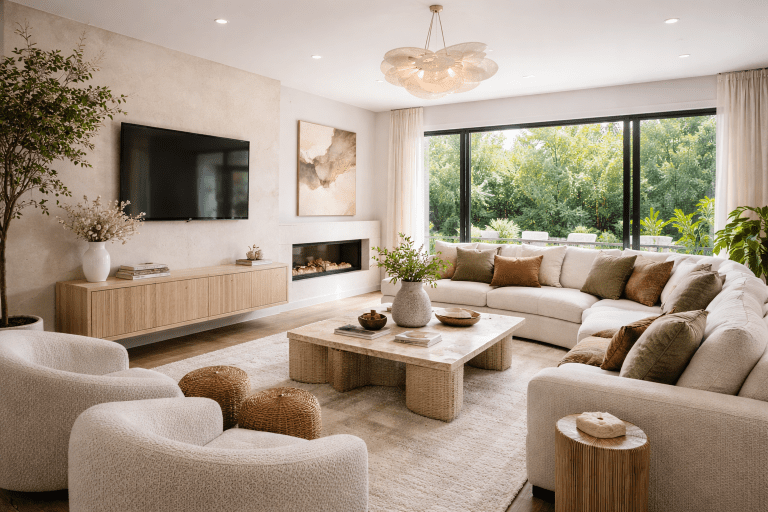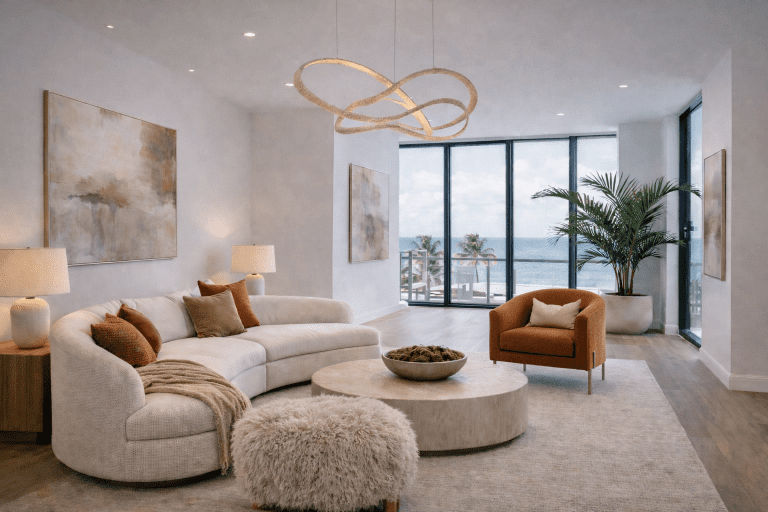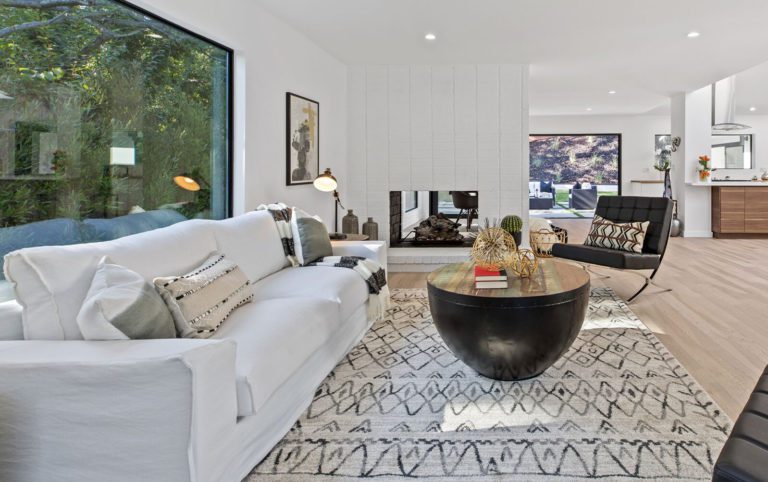
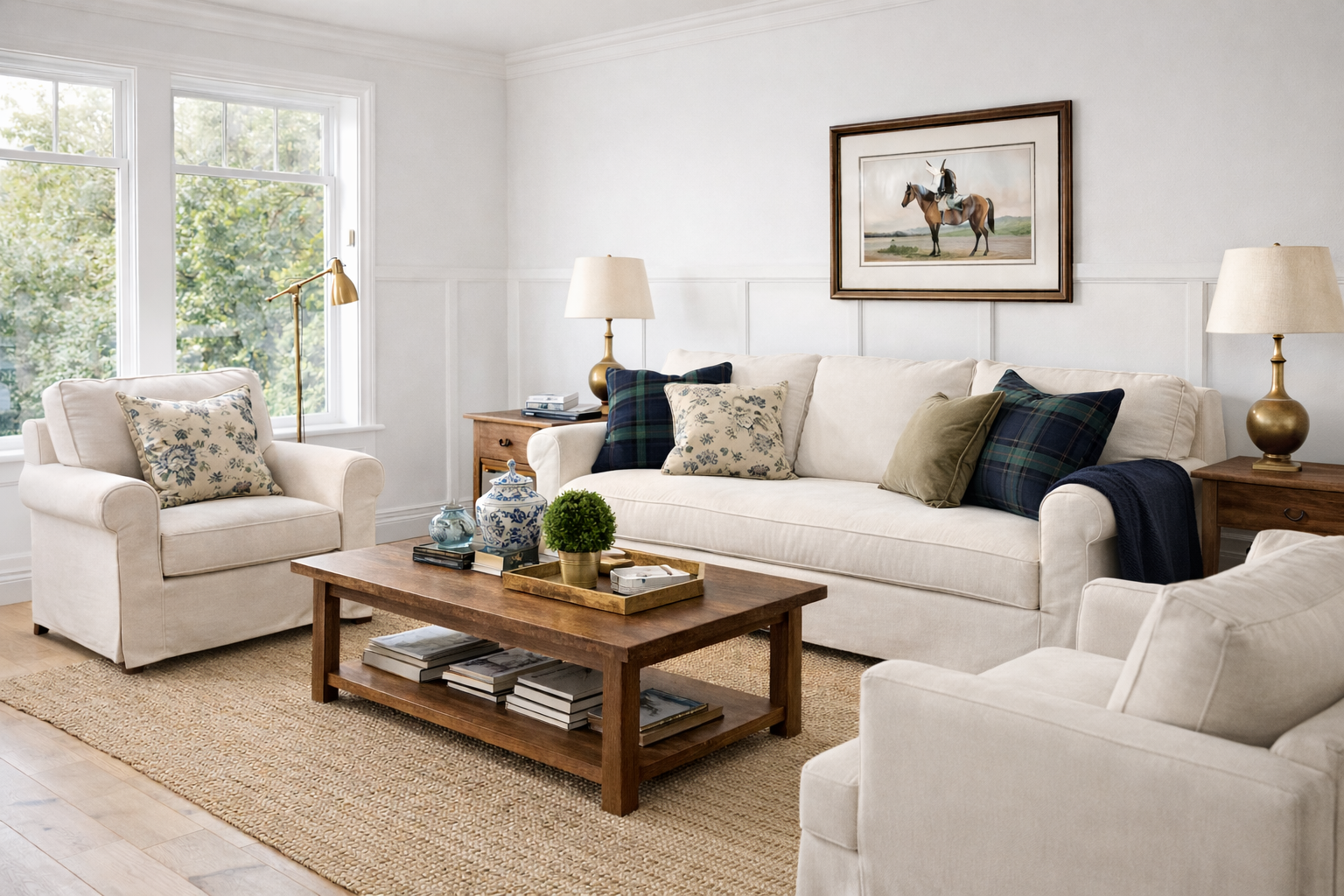
Home staging is most effective when it happens immediately before listing photography and showings. Completing repairs, updates, and cleaning first allows staging to present the property with clarity, cohesion, and architectural alignment rather than compensating for unfinished details.
Schedule a staging consultation with KMW Interiors.
Plan and reserve staging early; install it after preparation is complete. “Final step” refers to the installation sequence, not to when the conversation begins. Confirm the scope, access, and photography schedule with the staging team while repairs and other work are being coordinated. KMW’s home staging process is designed around that preparation.
Why staging belongs at the end of the listing preparation process
In many listings, staging is treated as a decorative step rather than a strategic one.
In reality, staging functions as the final layer of presentation—the moment when a property shifts from being “prepared” to being market-ready.
Repairs, lighting updates, painting, landscaping, and cleaning should happen first. These steps create a clean foundation. Once those elements are resolved, staging clarifies how the home lives and how buyers should experience the space.
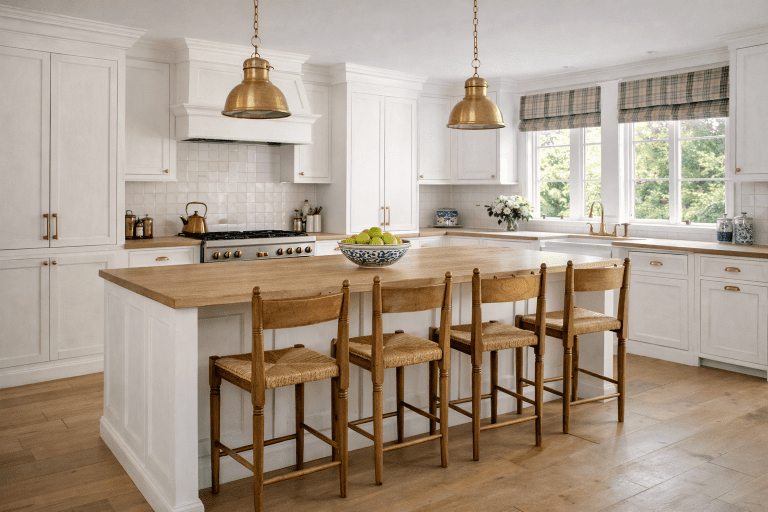
When staging occurs at the correct point in the preparation timeline, it does more than fill rooms with furniture. It establishes proportion, defines room function, and creates visual calm that helps buyers immediately understand the home.
In design-driven staging, the goal is not decoration. The goal is cohesion.
The relationship between staging and listing photography
Most buyers encounter a property first through listing photos.
Those images shape expectations long before a showing is scheduled.
When staging is installed immediately before photography, the property presents with:
• clear room purpose
• balanced furniture scale
• controlled visual composition
• architectural emphasis
These details may seem subtle, but they strongly influence buyer perception.
Listings that photograph with clarity and restraint tend to feel more elevated online. That first impression often determines whether buyers decide to see the property in person.
In competitive Los Angeles markets—particularly across West Los Angeles and the South Bay—this initial perception matters.

Why staging too early disrupts the process
Occasionally staging is scheduled before painting, flooring updates, or construction work is complete.
This creates unnecessary complications.
Furniture installations can be disrupted by contractors. Finishes may change after the staging plan is developed. Even simple work like repainting walls or replacing lighting fixtures can undermine the design composition that staging establishes.
When staging occurs too early, it often needs to be partially undone and rebuilt.
Keeping staging as the final step protects the integrity of the design and ensures the installation remains photo-ready.
Why staging is a presentation strategy, not decoration
A common misconception is that staging is primarily about aesthetics.
In practice, staging is closer to spatial communication.
It helps buyers understand:
• how rooms function
• how furniture fits within the architecture
• how spaces connect and flow
• how the home supports daily living
Without staging, buyers must interpret empty rooms themselves. That mental work can create uncertainty.
Staging removes that friction.
It provides a visual framework that helps buyers imagine life in the home immediately.
This is particularly important in larger or architecturally complex homes, where scale and layout are not always obvious.
The listing preparation sequence that works best
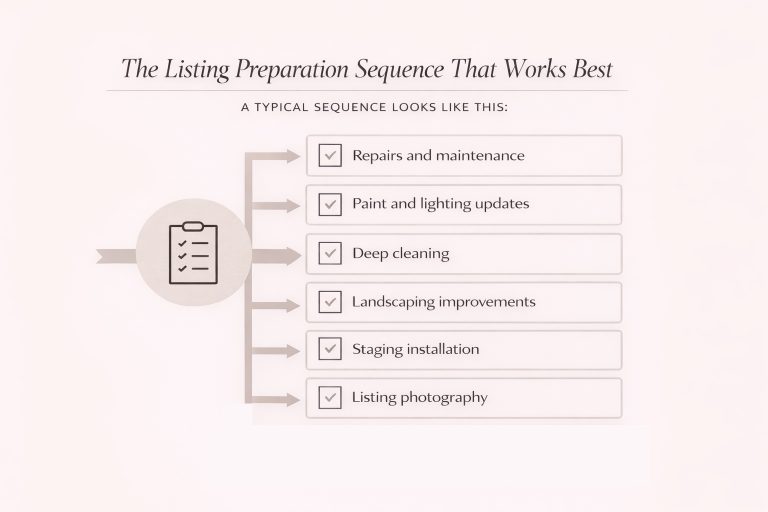
When staging is positioned correctly in the timeline, the preparation process tends to move smoothly.
A typical sequence looks like this:
Repairs and maintenance
Paint and lighting updates
Deep cleaning
Landscaping improvements
Staging installation
Listing photography
By the time photography takes place, the property is fully composed and ready for market.
Checklist: Preparing a property before staging
Before the staging installation date, confirm that the property is visually resolved.
☐ Repairs completed
☐ Walls painted or refreshed if needed
☐ Outdated lighting replaced
☐ Flooring cleaned or repaired
☐ Landscaping addressed
☐ Deep cleaning completed
Once these steps are finished, staging can elevate the property without competing against unfinished details.
Use what sellers should finish before staging to organize the property work, then review the agent’s pre-staging and photography checklist so the installation and photography can proceed in the right order.
Mistakes to avoid when planning staging
Scheduling staging before repairs are completed
Painting or remodeling after staging installation
Photographing the home before staging is fully installed
Treating staging as a last-minute decorative add-on
Attempting to list the property before presentation is finalized
FAQs
When should staging happen before listing a home?
Staging should take place after repairs, updates, and cleaning—but before listing photography and showings.
Should staging be installed before listing photos?
Yes. Professional staging should always be completed before photography so the property presents at its highest visual standard online.
How far in advance should staging happen before listing?
Typically staging is installed one to several days before listing photography depending on the size of the home.
Can staging happen while renovations are still underway?
It is generally best to wait until renovations and repairs are finished so staging can be installed once the home is fully prepared.
Does staging help buyers understand the layout of a home?
Yes. Staging clarifies room purpose and scale, which helps buyers interpret how the home functions.
Do higher-end homes still benefit from staging?
Yes. Larger homes often benefit even more from staging because it establishes proportion and architectural balance.
Does staging influence how expensive a home feels?
Yes. Furniture scale, composition, and material restraint can significantly influence perceived value.
Is staging necessary if the home is vacant?
Vacant homes often feel smaller and less defined. Staging provides scale and structure that help buyers visualize living in the space.
Service Area
KMW Interiors provides home staging and interior design services across West Los Angeles (Santa Monica, Venice, Culver City, Malibu, Pacific Palisades, Brentwood, Mar Vista, Playa Vista, Del Rey, Westchester, West Hollywood, Beverly Hills, Westwood, Holmby Hills, Bel Air, Hollywood Hills), the South Bay (Manhattan Beach, Hermosa Beach, Redondo Beach, Palos Verdes), and select Valley neighborhoods (Burbank, Sherman Oaks, Studio City).
View some of our client reviews here.