The rooms that influence buyers most during showings are the living room, kitchen, primary bedroom, and dining area. These spaces shape how buyers interpret the home’s lifestyle potential, scale, and overall value.
Expert Insight
Buyers rarely evaluate every room equally when touring a home. Most impressions are formed in the primary living spaces, where scale, light, and furniture arrangement shape how the entire property is perceived.
Key Takeaways
• Buyers focus on a small number of rooms when forming their first impressions.
• Living rooms, kitchens, and primary bedrooms typically influence perception the most.
• Strategic staging clarifies room function, scale, and architectural flow.
• Thoughtful presentation helps buyers emotionally connect with the home.
What Is Strategic Home Staging?
Strategic home staging is the process of arranging furniture, styling, and spatial composition to clarify how a home functions and to strengthen buyer perception during listing photography and showings.
Why certain rooms shape buyer perception more than others
When buyers walk through a home, they do not evaluate every space equally.
Instead, their attention naturally gravitates toward a handful of rooms that communicate how the home will feel to live in.
These spaces tend to shape the emotional response buyers have to a property.
The rooms that matter most are those that define the daily experience of living in the home.
For most properties, that includes the living room, kitchen, primary bedroom, and dining area.
When these rooms feel cohesive, well-proportioned, and calm, the entire home tends to feel more elevated.
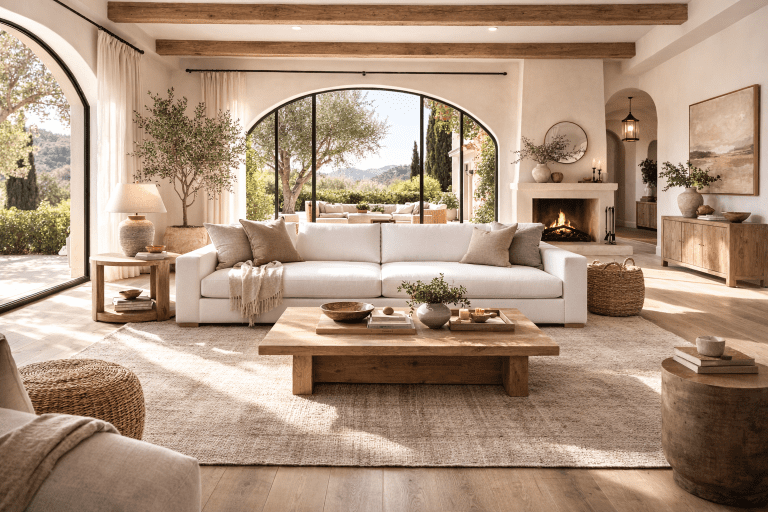
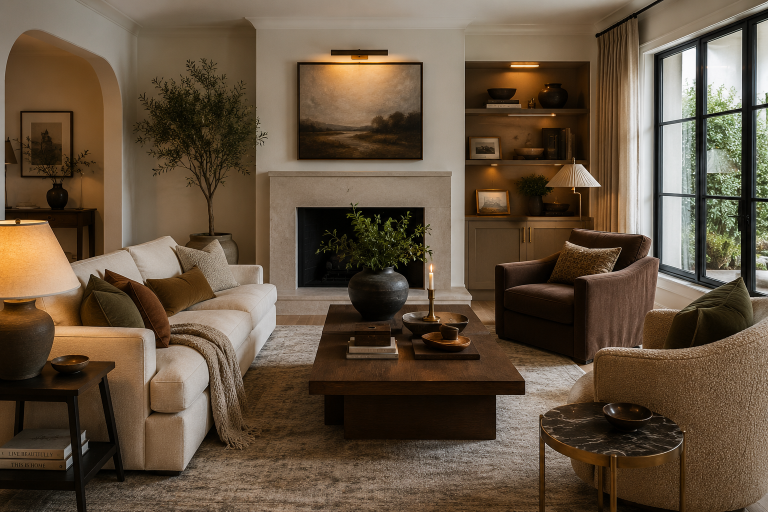
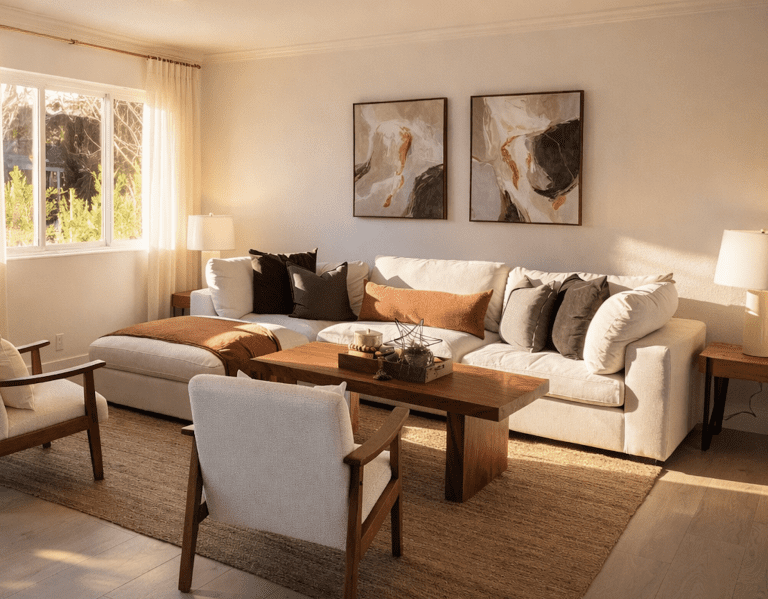
The living room: establishing scale and architectural flow
The living room is often the first major space buyers encounter.
This room sets expectations for the rest of the home.
Staging helps establish:
• furniture scale
• circulation paths
• architectural emphasis
Without staging, living rooms—especially larger ones—can feel undefined or disproportionate.
Properly scaled furniture anchors the room and helps buyers immediately understand how the space functions.
Expert Insight
The living room often establishes the visual language of the home. When furniture scale and layout align with the architecture, buyers tend to interpret the entire property as more refined and cohesive.
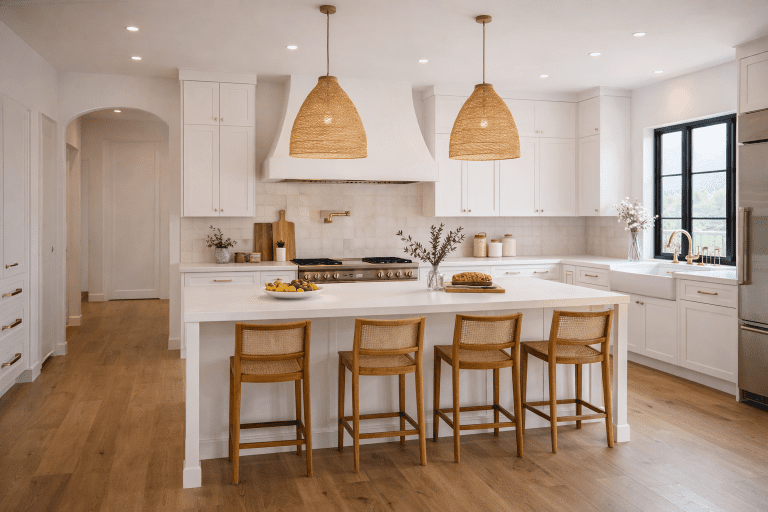
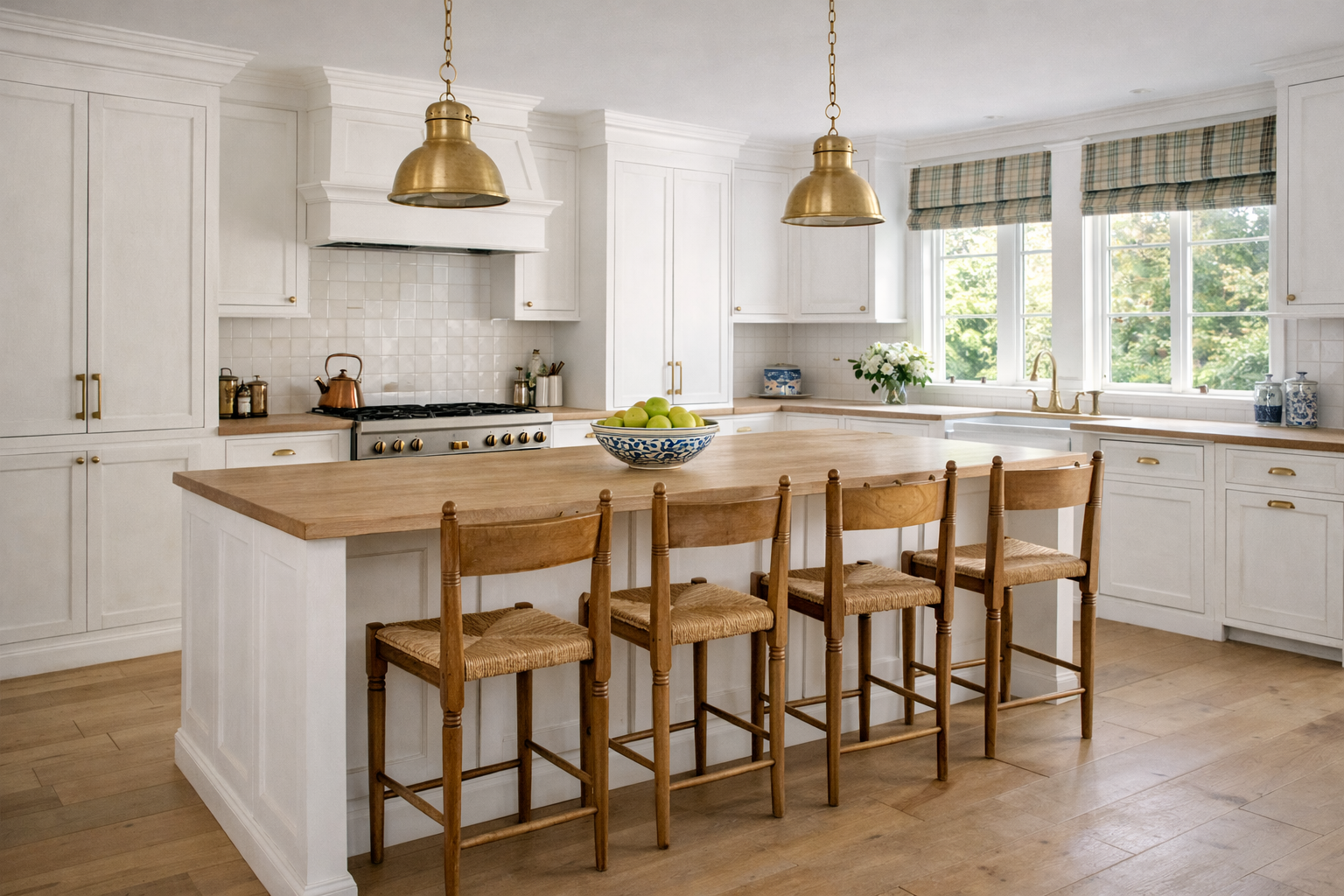
The kitchen: reinforcing value and lifestyle
Kitchens are one of the most influential rooms in buyer decision-making.
While staging cannot change cabinetry or appliances, it can refine how the kitchen is experienced.
Strategic styling can emphasize:
• countertop space
• natural light
• visual calm
Even small details—such as restrained styling and clean surfaces—can help kitchens photograph more effectively and feel more intentional during showings.
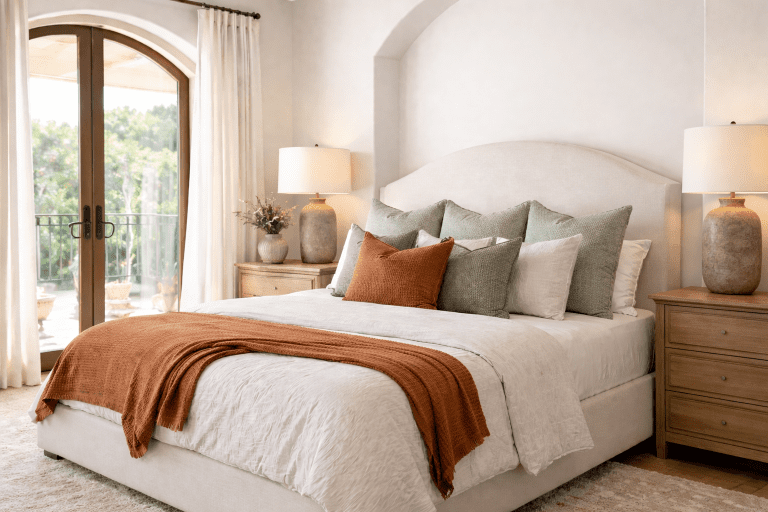
The primary bedroom: creating emotional connection
The primary bedroom plays an important psychological role during showings.
Buyers often imagine their daily routines here, which means the room must feel restful and appropriately scaled.
Staging helps communicate:
• proportion
• comfort
• livable scale
When a primary bedroom feels calm and balanced, buyers often interpret the entire home as more comfortable and well designed.
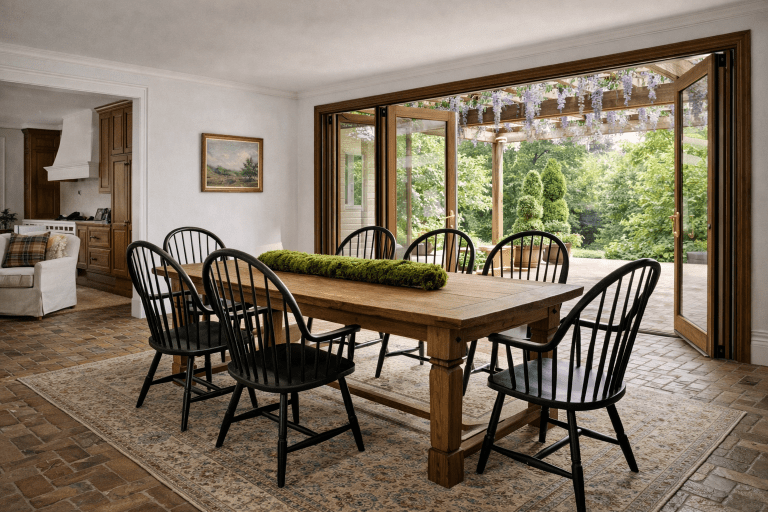
The dining area: clarifying how the home gathers
Dining spaces help buyers understand how the home accommodates gatherings and daily meals.
Without furniture, these rooms can feel ambiguous—especially in open floor plans.
Staging helps clarify:
• how many people the space can comfortably seat
• how the dining area relates to the kitchen and living areas
• how circulation flows through the home
This clarity helps buyers imagine entertaining and daily living.
Rooms that typically matter less
Not every room requires staging to influence buyer perception.
Secondary bedrooms, utility spaces, and smaller ancillary rooms often play a smaller role in buyer impressions.
In many listings, focusing staging efforts on the most influential rooms provides the strongest visual impact.
Expert Insight
Strategic staging focuses attention where it matters most. When the most influential rooms feel calm, balanced, and intentional, the rest of the home tends to inherit that positive perception.
Checklist: rooms to prioritize when staging
When staging strategically, focus on these spaces first:
☐ Living room
☐ Kitchen styling
☐ Primary bedroom
☐ Dining area
☐ Entry or foyer (when present)
These rooms shape the overall impression buyers form of the home.
Read “Why Staging Should Be the Final Step Before Listing” here
Mistakes to avoid when staging a home
Attempting to stage every room equally
Using furniture that is too small for the architecture
Overfilling rooms with decorative items
Ignoring the main living spaces
Leaving large rooms empty
Strategic restraint often creates the strongest presentation.
FAQs
Which rooms should always be staged?
Living rooms, primary bedrooms, dining spaces, and key gathering areas typically benefit most from staging.
Do kitchens need staging?
Kitchens are rarely furnished but benefit from restrained styling that keeps surfaces clean and emphasizes natural light.
Should every bedroom be staged?
Not necessarily. Prioritizing the primary bedroom and key living areas often delivers the strongest visual impact.
Do vacant homes benefit from staging?
Yes. Vacant homes often feel smaller and harder to interpret without furniture establishing scale.
Why does furniture scale matter in staging?
Proper scale helps buyers understand room proportions and circulation flow.
Service Area
KMW Interiors provides home staging and interior design services across West Los Angeles (Santa Monica, Venice, Culver City, Malibu, Pacific Palisades, Brentwood, Mar Vista, Playa Vista, Del Rey, Westchester, West Hollywood, Beverly Hills, Westwood, Holmby Hills, Bel Air, Hollywood Hills), the South Bay (Manhattan Beach, Hermosa Beach, Redondo Beach, Palos Verdes), and select Valley neighborhoods (Burbank, Sherman Oaks, Studio City).
View some of our client reviews here.