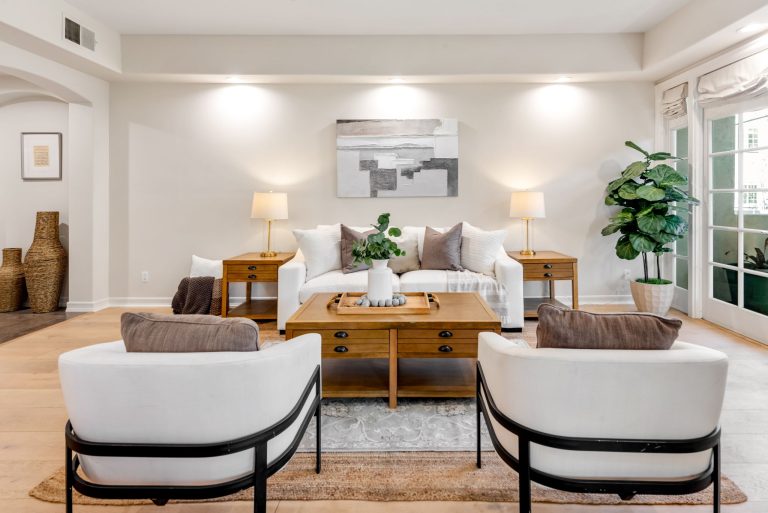
Quick Answer: A Los Angeles listing may be ready for a more meaningful reset when extended market exposure, repeated price adjustments, weak buyer response, or an unresolved presentation have become part of the property’s story. Before returning to market, the seller and agent should identify what needs to change—whether that is price positioning, property condition, staging, photography, or a combination of those factors.
Not every slow listing needs to be withdrawn. And not every property that has accumulated days on market needs staging. But there is a point when continuing with essentially the same presentation becomes different from giving the property more time.
For agents and sellers, the more useful question is: If this home returns to market, what will a buyer experience differently?
That question matters in the current Los Angeles market. Realtor.com reported that in August 2026, Los Angeles listings spent a median of 53 days on market, while 16.6% of active listings had received a price reduction. The median list price was $1.05 million, down 4.5% from the previous August.
Those numbers do not mean that a 53-day listing is unsuccessful, nor that every price reduction signals a presentation problem. They do show a market in which buyers have time to evaluate their options and sellers have reason to examine positioning carefully.
When a listing has already struggled, a relaunch should be more than a new date on the MLS. It should be a real reset.
How do you know when a listing needs more than additional time?
There is no universal number of days that makes a home stale. A better indicator is whether the existing strategy is still producing meaningful buyer engagement—and whether the property is entering each new week with essentially the same unresolved objections.
A broader review may be warranted when:
- the property has accumulated significant market exposure without securing a buyer;
- price adjustments have not meaningfully changed buyer response;
- showing feedback repeatedly points to condition, scale, layout, or presentation;
- a home that was marketed while occupied is now vacant;
- the listing was previously withdrawn or an earlier transaction failed;
- the current photography no longer represents the strongest version of the property; or
- the seller is prepared to make substantive changes before the next phase of marketing.
The point is not to label a home unsuccessful after an arbitrary number of days. It is to determine whether the existing presentation is still serving the property.
What should change before a listing is relaunched?
A relaunch is most credible when buyers encounter something materially different. That does not necessarily mean a major renovation. It means identifying what the first presentation did not resolve and deciding which changes are meaningful enough to address before the home is introduced again.
Pricing should be evaluated separately from staging
Professional staging should not be expected to compensate for a pricing problem. The listing agent and seller should evaluate current comparable properties, market conditions, previous buyer response, and the property’s pricing history independently.
Presentation and pricing perform different jobs. A home can be beautifully staged and still be poorly positioned if its asking price does not align with the market. Our discussion of staging in today’s Los Angeles market provides dated county context for that conversation.
Property preparation should be complete before staging
Visible repairs, paint, flooring, lighting, cleaning, landscaping, and other necessary preparation should generally be resolved before furniture is installed. Staging is strongest when it becomes the final presentation layer. It should help buyers understand the finished property—not distract from work that still needs to be completed.
The spatial presentation may need to be reconsidered
Once a property becomes vacant, the opportunity can change substantially. An empty home reveals the architecture, but it can also make questions of scale and function more pronounced.
How large should the seating arrangement be? Where does circulation naturally occur? Is an ambiguous room intended as a dining area, office, den, or secondary living space? Does a large room require more furniture—or simply better proportion?
Design-driven staging approaches those questions through the architecture first. The objective is not to make every room look fuller. It is to make the home easier to understand.
Can staging revive a stale listing?
Staging can address presentation problems. It cannot correct every reason a property has struggled. If the price is misaligned, important repairs remain unresolved, or buyers are consistently responding to a limitation that furnishings cannot change, those issues need to be considered directly.
A more complete relaunch strategy may involve several separate decisions:
- Pricing establishes market position.
- Property preparation addresses visible condition.
- Staging clarifies scale, function, circulation, and presentation.
- Photography communicates the revised property accurately.
- Listing strategy determines how that revised presentation is introduced to the market.
None of those elements should be asked to do the job of all the others. The strongest reset happens when they are coordinated.
What can previous KMW Interiors relaunch projects show us?
Several KMW Interiors staging projects provide useful examples of properties that returned to market after earlier unsuccessful exposure. These case studies should not be interpreted to mean that staging alone caused the eventual sales.
They are more useful for another reason: They show what happened when the next marketing effort did not simply repeat the previous presentation.
Abernathy Drive | Westchester
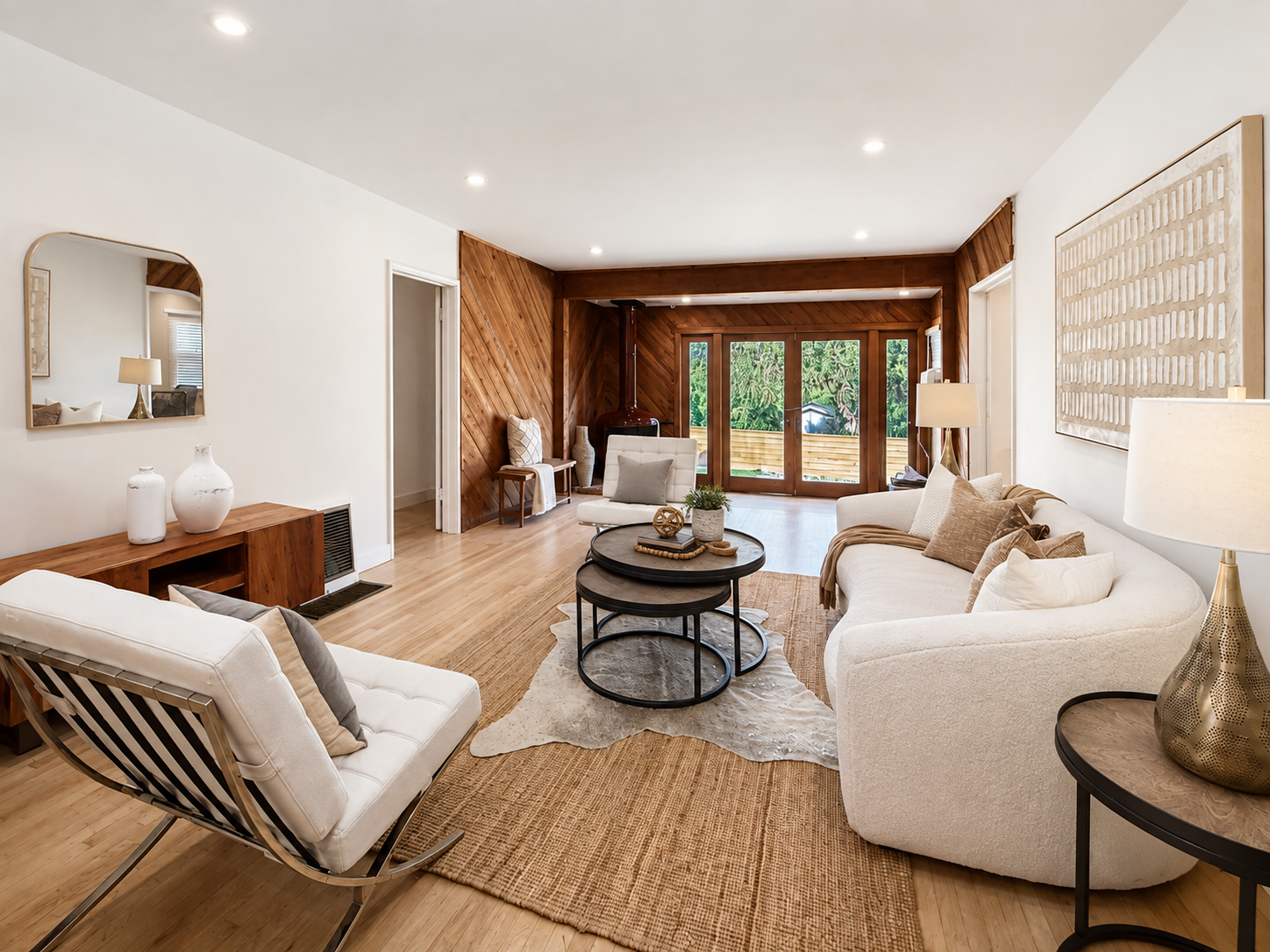
The Abernathy Drive residence had spent approximately seven weeks on the market without selling before the previous listing was withdrawn. KMW Interiors professionally staged the property before it returned to market during the late-fall selling season. The staged home relaunched at $1.499 million and ultimately closed for $1.5 million approximately 20 days after the relaunch.
The important lesson is not simply the timeline. The property returned to buyers with a materially different presentation rather than continuing the previous listing unchanged.
Tennessee Place | West Los Angeles

Tennessee Place had experienced previous unsuccessful market exposure before its 2025 return to market. For the relaunch, KMW Interiors staged the property to create a more resolved visual presentation. The home listed at $1.684 million, became contingent in approximately 27 days, and ultimately closed for $1.714 million—$30,000 above that asking price.
The outcome does not establish that staging created the price result. What the project demonstrates is how staging can become one component of a broader effort to reposition a property that has already been seen by the market.
13th Avenue | Los Angeles

The 13th Avenue residence had a more complicated marketing history, including an extended period on the market, multiple price adjustments, and an unsuccessful contract. The sellers eventually moved out. That created an opportunity to approach the property differently.
KMW Interiors fully staged the vacant residence before it returned to market in November at $1.099 million. The relaunched property secured a buyer in approximately 18 days and closed before the end of the year for $1,085,160.
Again, staging should not receive sole credit for the transaction. The more useful takeaway is that the relaunch represented a substantive change in how the property was presented.
Why can vacant staging matter more during a relaunch?
A first-time vacant listing and a vacant relaunch do not always carry the same strategic context. On a relaunch, buyers may already have encountered the property online or in person. The new presentation therefore has another job: It needs to help the property be reconsidered.
That does not call for more decoration. It calls for clarity. Furniture scale can establish the true dimensions of a room. A thoughtful layout can clarify circulation. A properly defined dining area can explain the relationship between the kitchen and living spaces.
A restrained bedroom installation can show proportion without overwhelming the architecture. And consistent furnishing language throughout the home can make separate rooms feel like parts of the same property. The effect should feel intentional rather than conspicuously “staged.”
Does a successful relaunch always require new staging?
No. The purpose of a relaunch review is to identify the actual problem—not to prescribe staging automatically.
A home that was already thoughtfully furnished may need another change. A property with significant deferred maintenance may need preparation before presentation is reconsidered. A listing with strong photography and clear spatial definition may primarily require a pricing or marketing adjustment.
Professional judgment begins with diagnosing the property rather than prescribing the same solution to every listing.
What should agents and sellers review before a relaunch?
Before returning a property to market, consider these questions:
- What did the first period of market exposure actually tell us?
- Are we responding to buyer feedback or simply reacting to days on market?
- Has pricing been evaluated independently of presentation?
- Are visible condition issues complete?
- Has the property become vacant since the first launch?
- Are important rooms difficult to understand without furnishings?
- Does the existing furniture accurately communicate the scale of the architecture?
- Will the photography represent a materially improved presentation?
- Are we changing something substantive—or simply restarting the listing?
The goal is not to erase the property’s market history. It is to learn from it.
Mistakes to Avoid When Relaunching a Home
Relaunching with essentially the same property presentation
Changing the listing date is not the same as changing the buyer experience. If the price, condition, photography, furnishings, and positioning remain essentially unchanged, the second launch may inherit the same weaknesses as the first.
Treating staging as a substitute for pricing discipline
Presentation cannot resolve every objection. Staging and pricing should be evaluated as separate parts of the strategy.
Staging before property preparation is complete
Painting, repairs, flooring work, cleaning, and other visible preparation should be coordinated before installation whenever possible. The finished listing should feel resolved.
Using furniture that ignores the architecture
Furniture that is underscaled, oversized, fragmented, or poorly positioned can make a room more difficult to understand rather than less. For KMW Interiors, the architecture establishes the starting point.
Assuming more furnishings will create more impact
A relaunch does not need to feel more elaborate. It needs to feel more coherent. Strategic restraint is especially important when the architecture already provides the visual interest.
Frequently Asked Questions About Re-Staging and Relaunching a Home
Should every stale listing be withdrawn and relisted?
No. Market time alone is not enough to determine the appropriate strategy. The listing agent should evaluate buyer response, pricing, current market conditions, property condition, and the seller’s objectives before deciding how to proceed.
Should a home be staged before it is relisted?
When presentation is one of the issues limiting the property—and especially when the home is vacant—professional staging may be appropriate before new photography and marketing are created.
Can an active listing be staged without being withdrawn?
Yes. Staging does not inherently require a property to be withdrawn. The appropriate listing strategy should be determined by the seller and listing agent.
Does a relaunch require a price reduction?
Not automatically. Pricing should be evaluated using current market evidence and the property’s individual history rather than assuming every relaunch requires the same adjustment.
What if the property was already listed vacant?
A vacant home can still benefit from staging when furniture would help buyers understand scale, circulation, room function, or relationships between spaces.
Should photographs be replaced after staging?
If the property has been materially changed, the listing photography should accurately represent the new presentation.
Does staging guarantee that a previously unsuccessful listing will sell?
No. Staging cannot guarantee a sale, selling timeline, offer amount, or buyer response. It is one component of the property’s overall presentation and marketing strategy.
What kind of staging does KMW Interiors provide?
KMW Interiors focuses on Design-Driven Home Staging for vacant properties, with an emphasis on architecture, proportion, spatial clarity, and cohesive presentation.
A Relaunch Should Give Buyers a Reason to Look Again
A property that has already spent meaningful time on the market does not necessarily need more furniture, more accessories, or a more dramatic presentation. It needs a clear diagnosis of what the first launch did not resolve.
Sometimes that is price. Sometimes it is condition. Sometimes it is marketing. And sometimes the architecture has never been presented as clearly as it could be.
When staging is part of the answer, its role should be precise: clarify proportion, establish function, support circulation, and create a cohesive relationship between the furnishings and the property itself. That is what turns staging from decoration into presentation strategy.
KMW Interiors provides Design-Driven Home Staging across Los Angeles, including West Los Angeles, the South Bay, and select Valley neighborhoods.
Arrange an introductory call to discuss your property’s staging scope and whether a new presentation should be part of its relaunch strategy.
Source note: Los Angeles market context is based on Realtor.com Economic Research reporting published September 4, 2026, using August 2026 MLS activity. Project results are drawn from KMW Interiors’ documented case-study records.