Why Some Homes Feel Instantly Calm — and Others Don’t

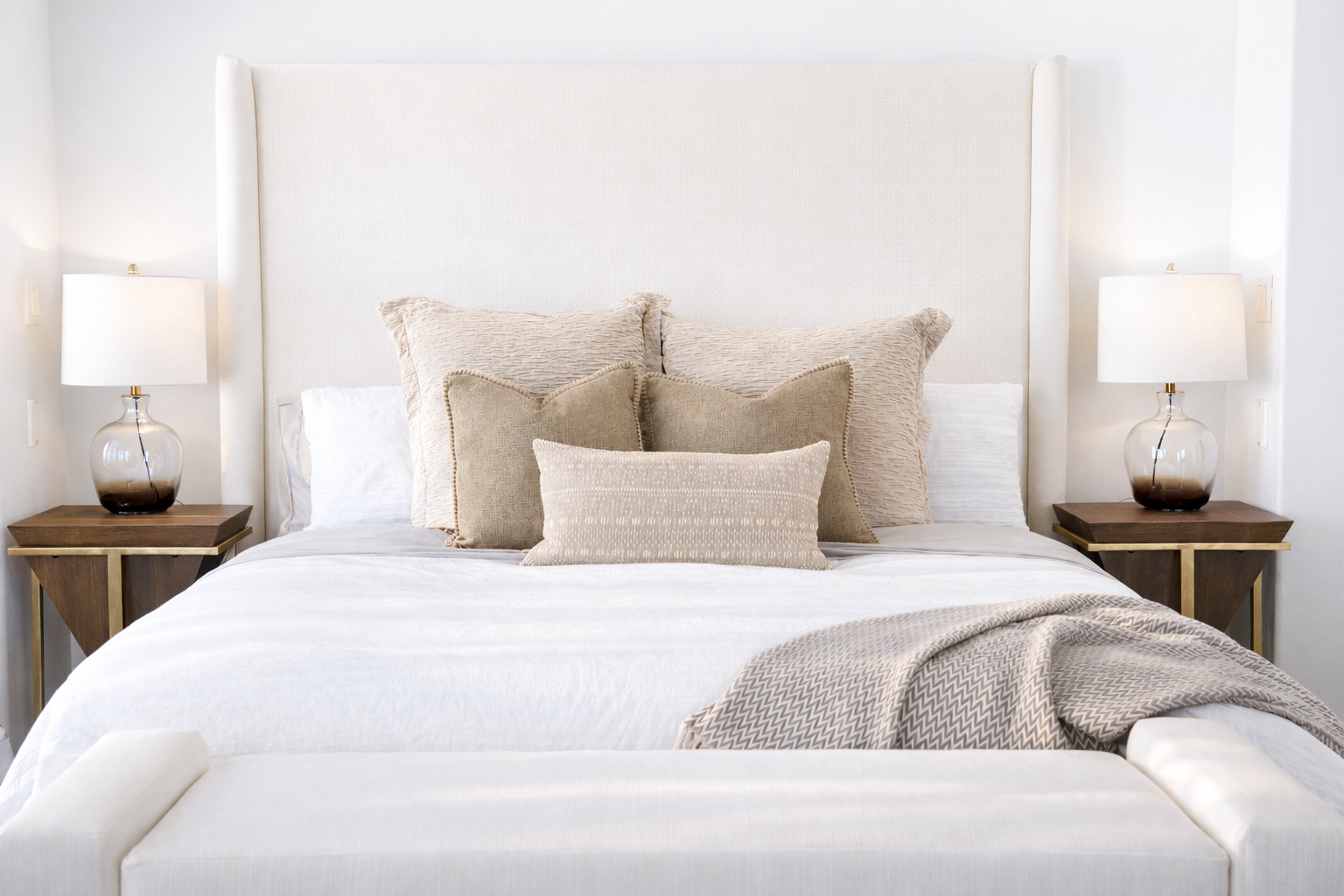
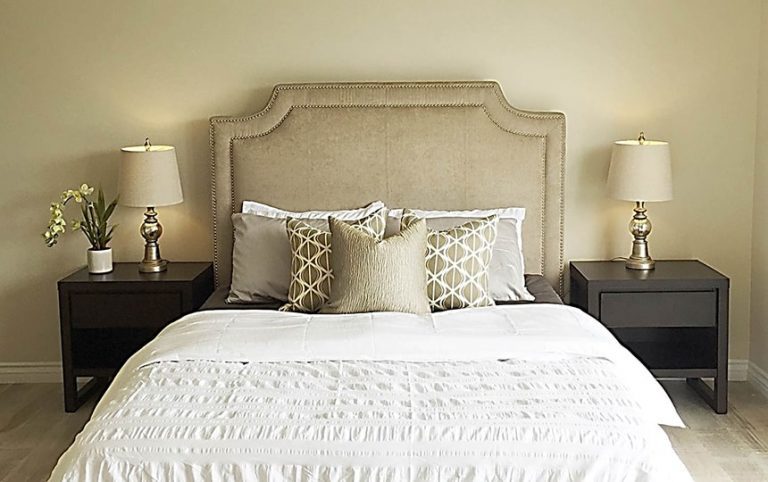
Light and Bright Bedroom Design

Homes that feel calm usually share the same underlying qualities: balanced proportion, restrained materials, thoughtful lighting, and clear spatial flow. When these elements align, a home feels cohesive and effortless. When they compete, the space can feel visually noisy—even when beautifully furnished.

Schedule a design consultation.

The Psychology of Spatial Calm

The feeling of calm in a home is rarely about decoration. It comes from how the space is structured.

When proportion, light, and material choices are aligned, the eye can move comfortably through the environment. Nothing demands attention unnecessarily.

This is why some homes feel immediately welcoming while others—even well-furnished ones—can feel unsettled.

Calm is a result of clarity and restraint.

Proportion: The Quiet Foundation of Good Design

One of the most overlooked contributors to calm interiors is proportion.

Furniture that is underscaled or oversized relative to the architecture creates visual tension. Proper scale allows the room to feel grounded.

This is particularly important in Los Angeles homes where:

  • ceilings are often higher

  • rooms flow into one another

  • natural light emphasizes spatial balance

When proportion is right, a room feels intentional without trying.

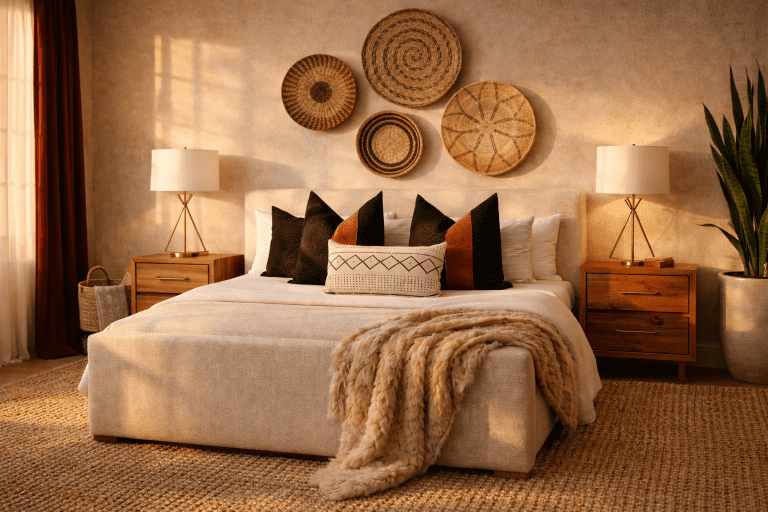
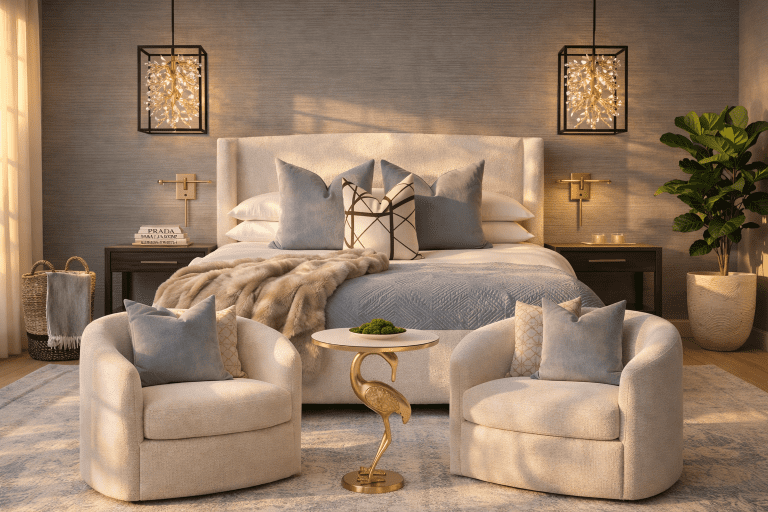
Modern Organic Bedroom
Modern Organic Bedroom Design

Material Restraint

Calm interiors rarely rely on many competing finishes.

Instead, they use a limited palette of materials layered thoughtfully:

  • natural wood tones

  • stone surfaces

  • linen and wool textiles

  • warm metals

When materials relate to one another, the space feels cohesive rather than styled.

This restraint allows texture to create interest without visual noise.

Lighting That Supports the Architecture

Lighting plays a quiet but powerful role in how a home feels.

Rooms that rely only on overhead lighting often feel flat and exposed. Layered lighting—ambient, task, and accent—creates depth and softness.

In well-designed homes, lighting emphasizes architectural features rather than overpowering them.

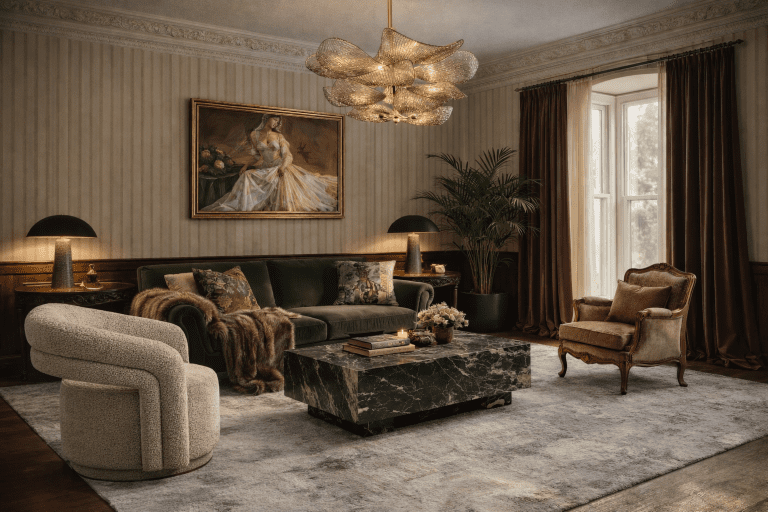
mixed style living room
Mixed style living room with complimentry lighting styles

Flow Between Spaces

Calm homes rarely feel like a collection of separate rooms.

Instead, there is a visual rhythm from one space to the next. Materials repeat subtly. Colors transition naturally. Furniture placement supports movement rather than interrupting it.

In open-plan homes especially, this continuity is essential.

Without it, spaces can feel fragmented.

What Disrupts a Calm Interior

Several common design mistakes can unintentionally create visual tension.

These include:

  • too many contrasting finishes

  • overcrowded rooms

  • inconsistent color palettes

  • poor lighting hierarchy

  • furniture that blocks natural circulation

Each of these interrupts the natural rhythm of the space.

Checklist: Elements of a Calm Interior

☐ Furniture scale aligns with the architecture
☐ Materials feel cohesive and layered
☐ Lighting includes multiple sources
☐ Rooms allow visual breathing space
☐ Color transitions smoothly between areas
☐ Circulation paths feel natural and open

Mistakes to Avoid

Overfurnishing rooms
More furniture rarely improves a space.

Chasing trends instead of cohesion
Trends date quickly when they disrupt architectural context.

Ignoring lighting layers
Lighting dramatically affects how a home feels.

Mixing too many design directions
Consistency creates calm.

FAQs

What makes a home feel calm?

Balanced proportions, cohesive materials, thoughtful lighting, and uncluttered spaces contribute to a calm environment.

Do neutral colors create calm interiors?

Often, but calm comes more from cohesion than color alone.

Can furniture layout affect how a home feels?

Yes. Layout determines how people move through the space and how visually open it feels.

Does lighting affect mood in a home?

Absolutely. Layered lighting adds depth and softness, which makes spaces feel more comfortable.

Do modern homes naturally feel calmer?

Not always. Calm interiors depend on proportion and material choices more than architectural style.

Can staging create this same calm feeling?

Yes. Strategic staging often focuses on proportion, restraint, and visual clarity.

Service Area

KMW Interiors provides home staging and interior design services across West Los Angeles (Santa Monica, Venice, Culver City, Malibu, Pacific Palisades, Brentwood, Mar Vista, Playa Vista, Del Rey, Westchester, West Hollywood, Beverly Hills, Westwood, Holmby Hills, Bel Air, Hollywood Hills), the South Bay (Manhattan Beach, Hermosa Beach, Redondo Beach, Palos Verdes), and select Valley neighborhoods (Burbank, Sherman Oaks, Studio City).

View some of our client reviews here.