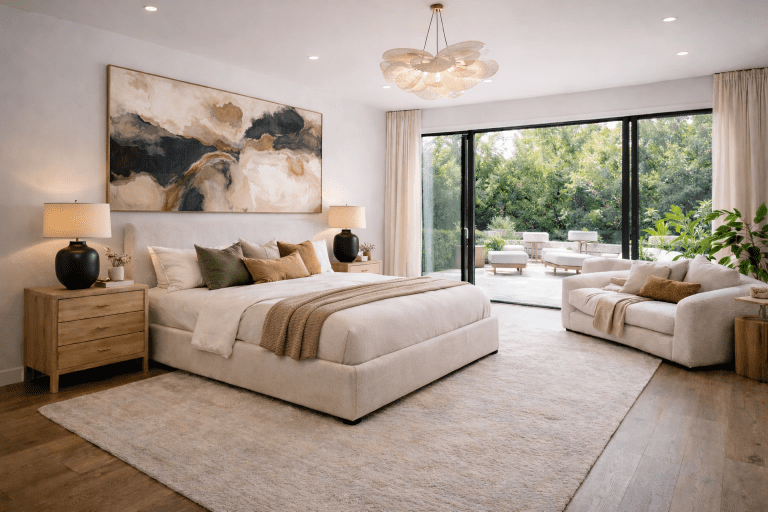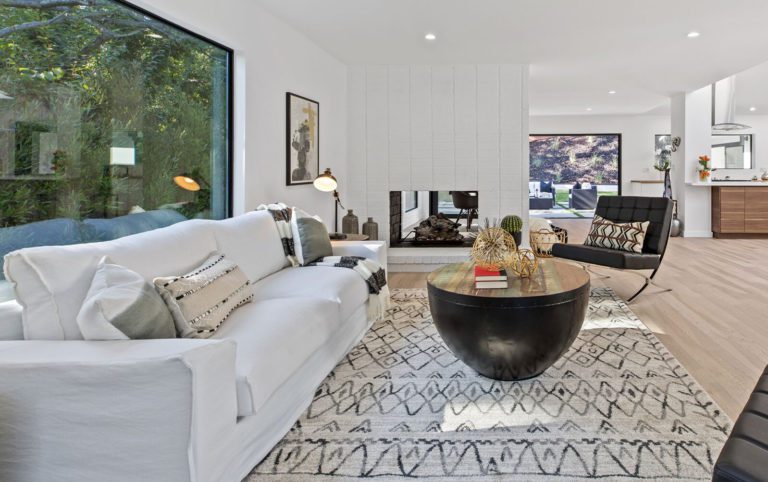
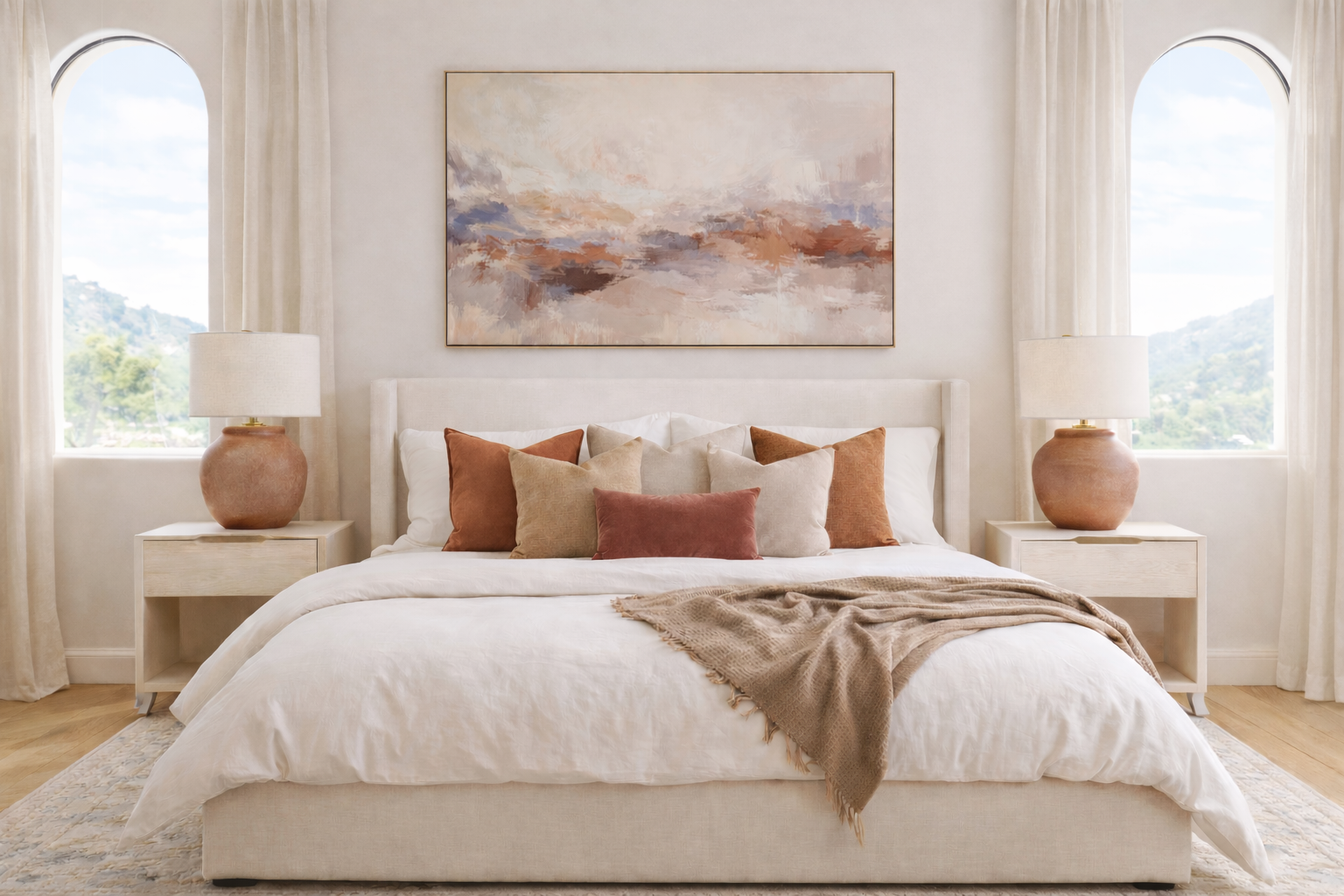
Yes — home staging can go too far. When a property feels overfilled, overly themed, or disconnected from its architecture, buyers may perceive it as forced rather than refined. Effective staging clarifies scale, proportion, and purpose — it does not compete with the home itself.
In competitive markets, presentation shapes perception.
But more furniture, more decor, and more visual layers do not automatically create more value. In fact, over-staging can subtly undermine a listing — especially in higher-end Los Angeles neighborhoods where buyers are visually literate and architecturally aware.
The goal is not decoration.
The goal is clarity.
What Does “Over-Staging” Actually Mean?
Over-staging happens when styling distracts from the property rather than supporting it.
This may include:
• Too many accent pieces
• Overscaled furniture that crowds circulation
• Excessive layering for the sake of “luxury”
• Trend-heavy decor that dates quickly
• Rooms staged with unclear function
Instead of enhancing the architecture, the staging becomes the focal point.
Buyers begin evaluating the design choices rather than the home.
Can Over-Staging Hurt a Home Sale?
Yes — particularly in refined markets like West Los Angeles, the South Bay, and select Valley neighborhoods.
Over-staging can:
• Make rooms feel smaller than they are
• Disrupt natural flow
• Create visual fatigue in listing photography
• Signal overcompensation
• Reduce perceived authenticity
Today’s buyers scroll quickly and decide quickly.
Clutter — even curated clutter — slows that decision.
Restraint reads as confidence.
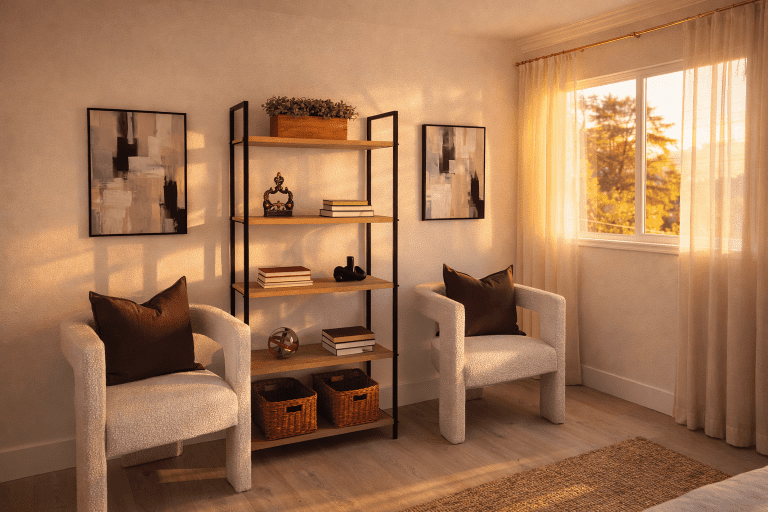
Why Less Often Feels More Expensive
Luxury presentation is disciplined.
In high-value homes, buyers respond to:
• Negative space
• Proper scale
• Intentional material contrast
• Clear sight lines
• Natural light
When every surface is filled, the eye has nowhere to rest.
The most expensive-feeling interiors are rarely crowded.
They are composed.
How Do You Know If a Home Is Over-Staged?
Ask these questions:
• Does the architecture feel visible — or obscured?
• Can you walk comfortably through the room?
• Is the furniture scaled appropriately?
• Does the staging align with the home’s style?
• Would removing one or two pieces improve clarity?
If removing items improves the room, it was likely over-staged.
Checklist: Balanced Staging Principles
Effective staging should:
✔ Highlight architectural strengths
✔ Clarify room function
✔ Enhance proportion
✔ Improve photography
✔ Feel cohesive — not decorative
✔ Allow buyers to imagine themselves in the space
If it feels styled for Instagram rather than for sale, it may be too much.
Mistakes to Avoid
• Filling every corner
• Layering for the sake of visual richness
• Using oversized artwork to create “impact”
• Mixing too many styles
• Prioritizing trend over architecture
In Los Angeles, buyers notice nuance.
Subtle staging performs better than spectacle.
Is Minimal Staging Always Better?
Not necessarily.
Under-staging can feel unfinished or temporary.
The balance lies in:
Purposeful furnishing
Architectural respect
Material quality
Spatial discipline
The strongest listings feel intentional — not sparse, not crowded.
FAQs
Is it possible to over-stage a luxury home?
Yes. Excessive furniture, heavy styling, or trend-driven decor can distract from architectural value and reduce perceived authenticity.
Does over-staging make a house look smaller?
It can. Overfilled rooms restrict visual flow and reduce the perception of square footage.
Do buyers prefer minimalist staging?
Buyers prefer clarity. Minimalism works when it aligns with the home’s architecture and scale.
Can staging hurt appraisal value?
Staging does not directly impact appraisal value, but visual overcrowding can influence buyer perception and negotiation leverage.
Should high-end homes be staged differently?
Yes. Higher-end buyers expect proportion, restraint, and material quality rather than decorative excess.
Is empty better than over-staged?
An empty home can feel cold and difficult to scale. Balanced staging is typically more effective than either extreme.
Service Areas
West Los Angeles (Santa Monica, Venice, Culver City, Malibu, Pacific Palisades, Brentwood, Mar Vista, Playa Vista, Del Rey, Westchester, West Hollywood, Beverly Hills, Westwood, Holmby Hills, Bel Air, Hollywood Hills), the South Bay (Manhattan Beach, Hermosa Beach, Redondo Beach, Palos Verdes), and select Valley neighborhoods (Burbank, Sherman Oaks, Studio City).
View some of our client reviews here.